









These markers allow you to draw and write on almost any surface. The water-based pigmented ink is non-toxic, odourless, does not bleed through, and dries to a opaque, lightfast and waterproof finish. The fine tip is perfect for adding detail. The line width varies depending on the pressure you apply and the surface you’re working on. The ink flows smoothly — whether you’re drawing sweeping lines or creating even, streak-free areas of colour. You can apply any colour opaquely over any other colour.
And the name? It’s a combination of ‘aqua’ (water) and ‘create’ — hence ‘acrea’!
We asked Nadine Bieg — a professional German illustrator who lives and works in The Hague — to give these markers a go. Read her hands-on REVIEW here!
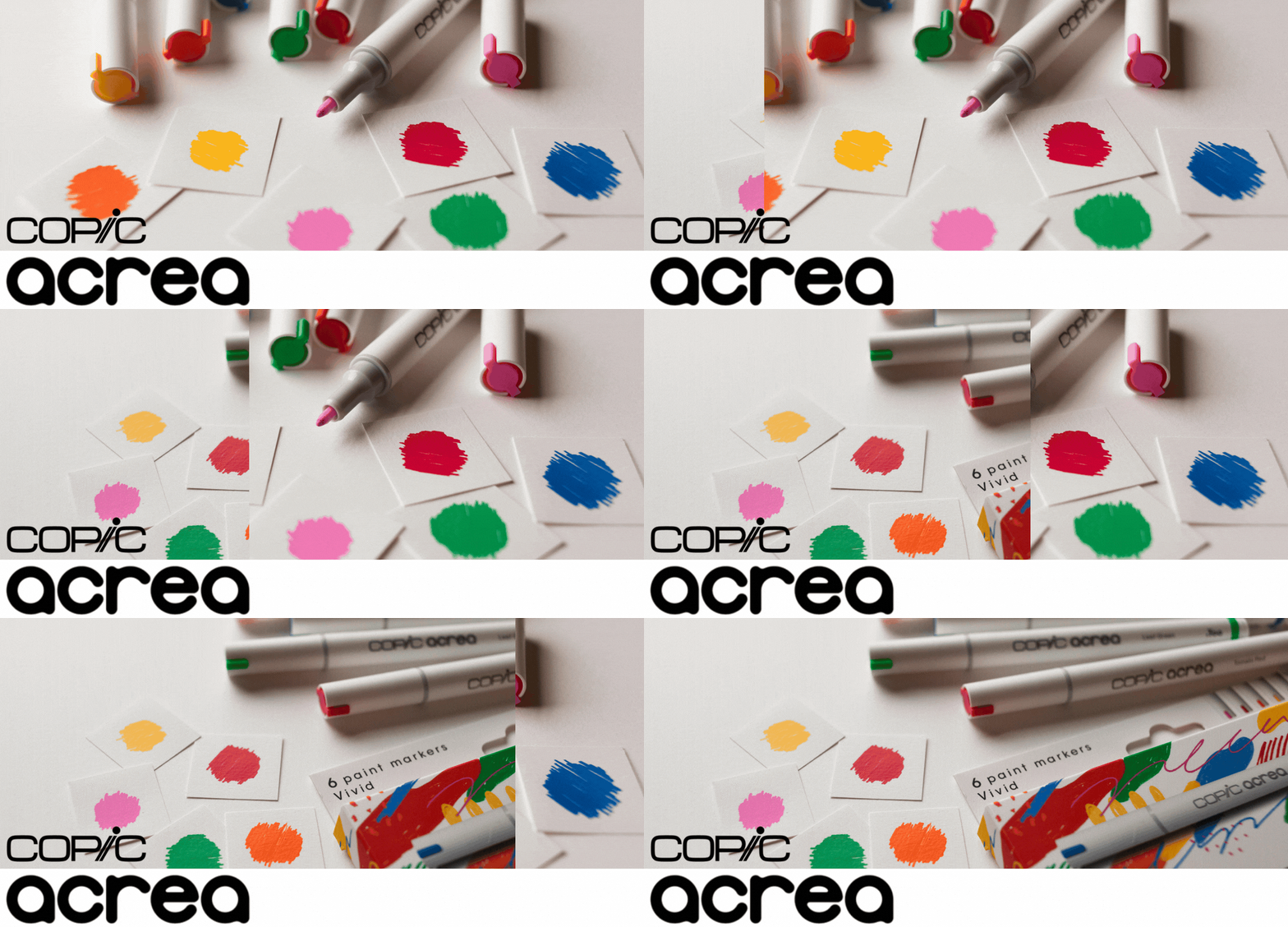
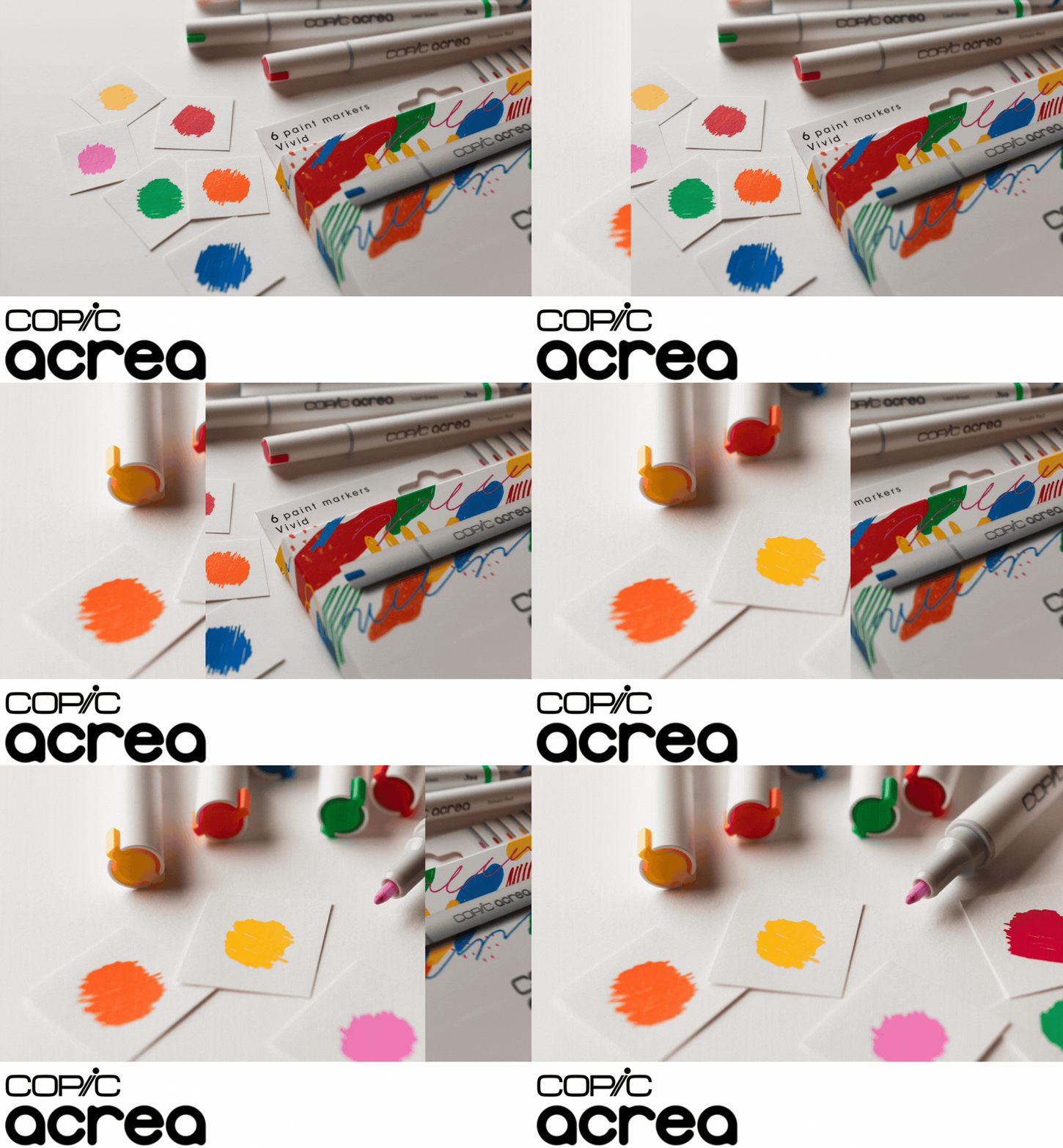
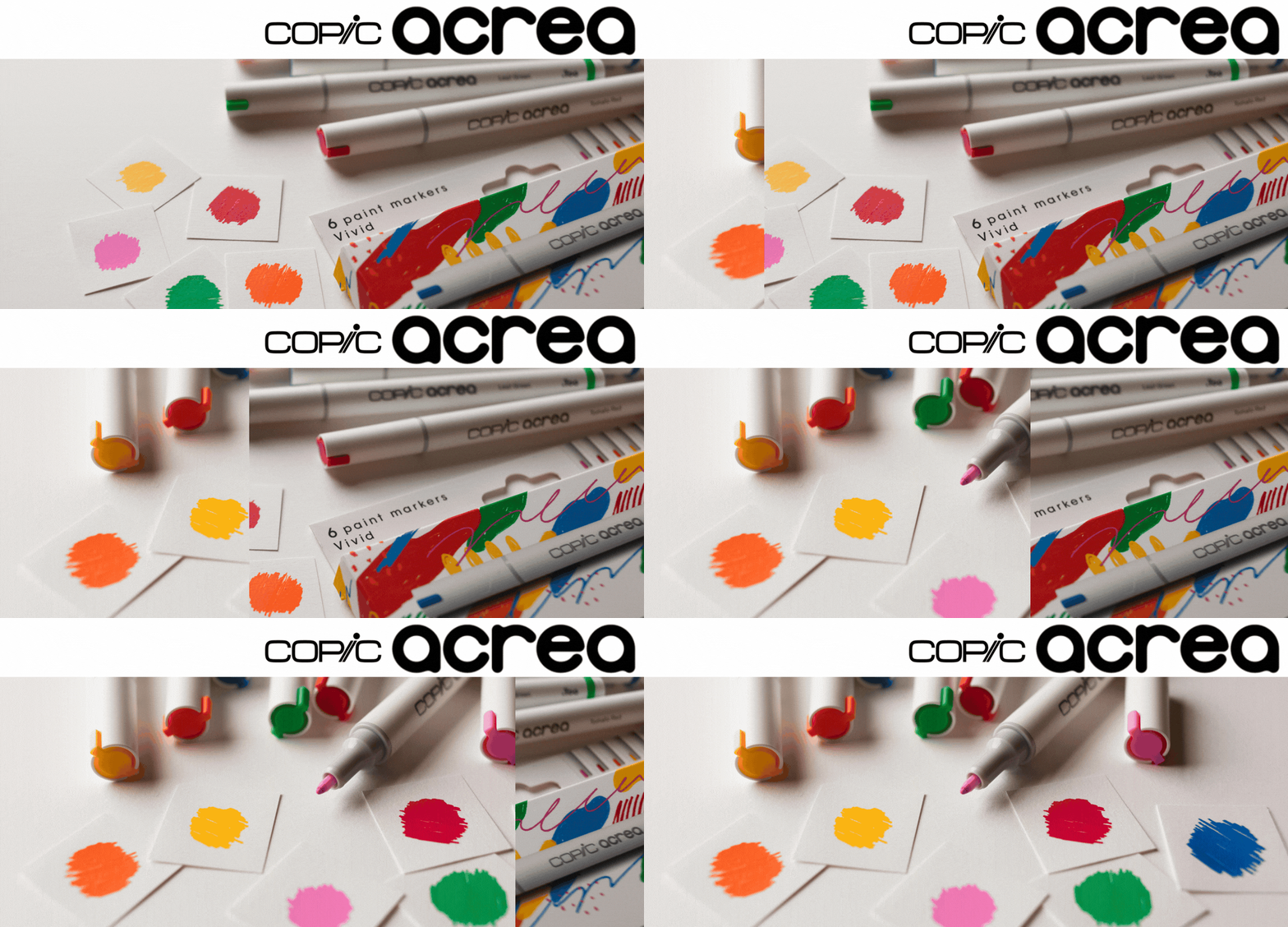
COPIC® Classic Markers have always been my favourites — I’ve actually been using them throughout my entire creative career.
So when Gerstaecker asked me to try out their latest marker — the Acrea Paint Marker — I was immediately up for it! Especially as these new markers seem to suit my current working style much better, which is mainly mixed media.
Let’s see how it went!
► What you'll need — this is what I used
With the acrea paint markers, you can choose individual colours:
COPIC® | acrea marker ○ water-based — individual
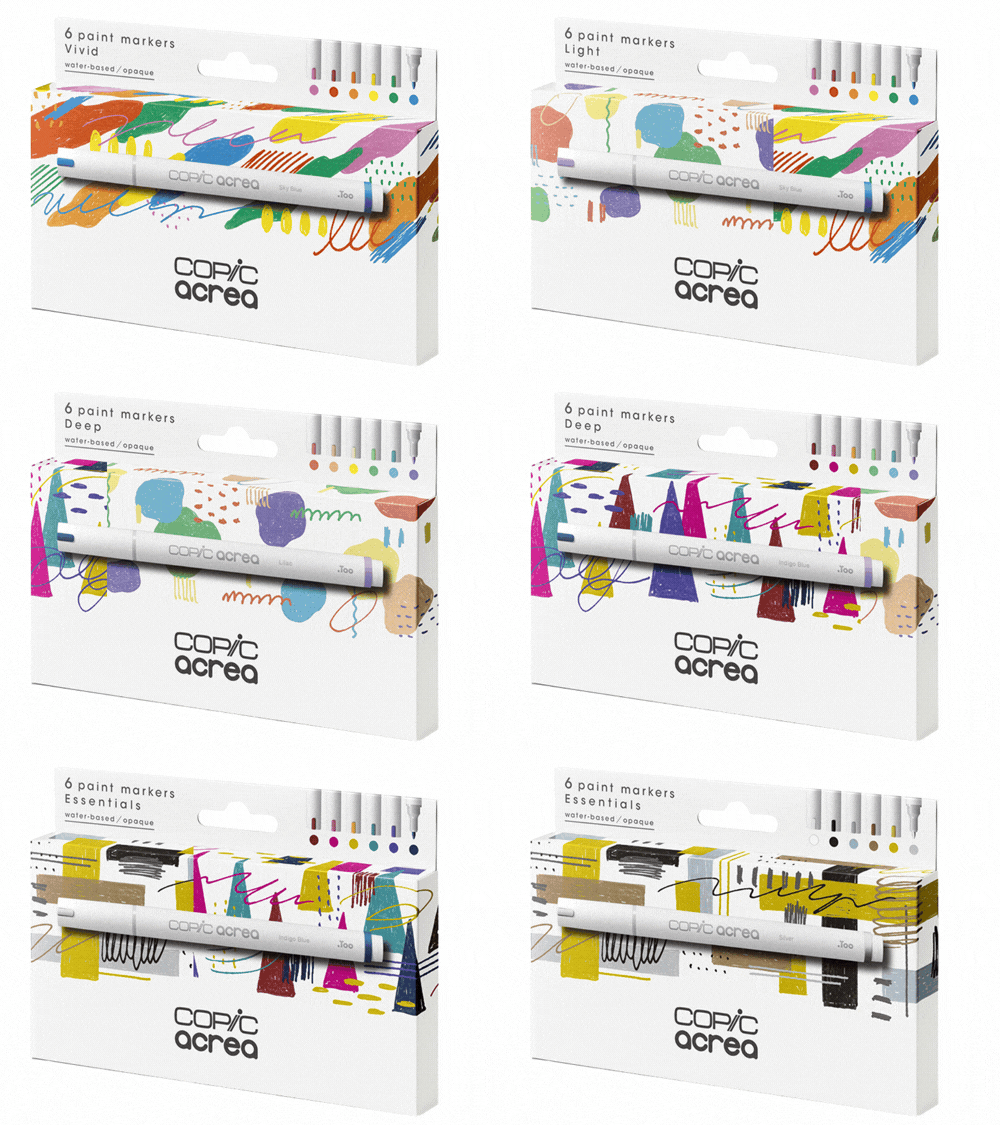
You can also choose from four sets, each containing six colours:
○ Essentials ○ Vivid ○ Light ○ Deep
COPIC® | acrea marker ○ water-based — 6-sets
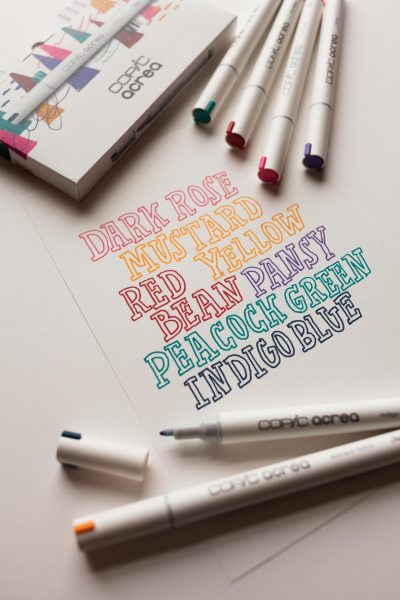
As well as some individual colours, I chose the Vivid set and the Deep set. Two colours quickly became my favourites: 021 Red bean and 022 Mustard yellow.
I worked on this versatile paper:
GERSTAECKER | No. 5 multi-block
TIP! The No. 1–2–3–4–5 range from GERSTAECKER — student quality, but with exceptional value for money.
This means you can sketch and experiment to your heart’s content without a care in the world! And with this starter set, you can give this paper a go!
TIP! Experimenting on black paper? These sketchbooks offer great value for money.
TIP! You can also combine this marker perfectly with COPIC® alcohol-based markers — whether they’re the Classic, Ciao or Sketch markers.
► review — my first impressions
I thought to myself, what's the best way to start? So, I just started drawing with these markers — hands-on and just go with it! Are you curious about my first impressions?
- My first impression — about the markers
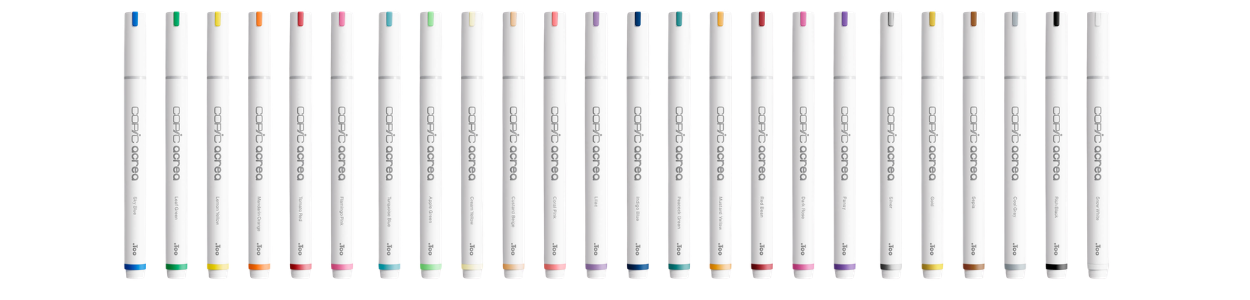
The Acrea paint markers are water-based pigment markers. That means they’re odourless and working with them is very different from the well-known COPIC® alcohol markers. For example, they only have one tip — 0.8 mm — and not two, like those other markers.
For me as a designer, these new markers look super-elegant — I’m quite taken with the minimalist design, especially the white matt finish. I also like that they’re quite slim compared to other markers. That might be a personal preference, but I find it easier to work with slimmer markers.
The small coloured spot on the cap and the coloured ring indicate the colour of the chosen marker. You can stick the cap onto the end of the marker, because, as I said, there’s only one tip. I love this simple yet handy feature.
- My first impressions — on the colours
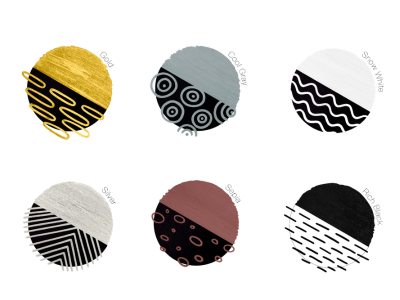
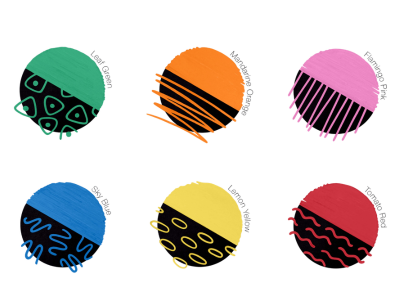
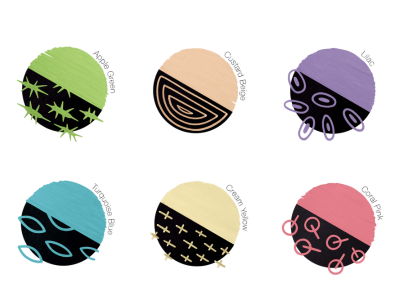
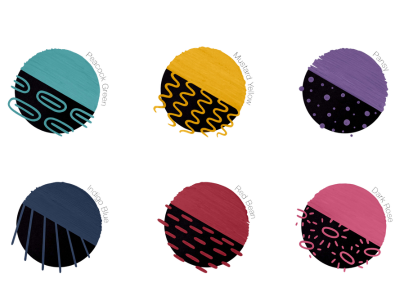
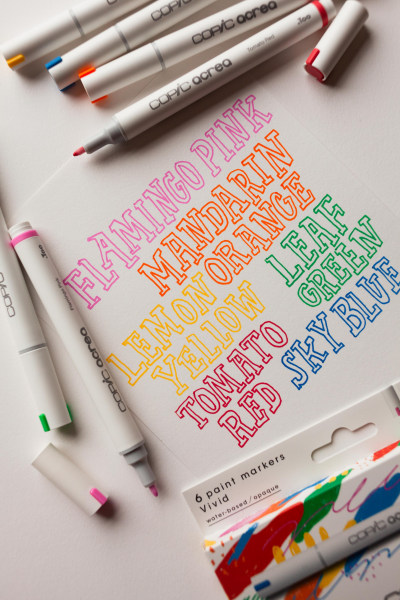
I tried out two sets — the Vivid set and the Deep set — each containing six markers, as well as a few individual markers. The colour palette of each set was a very pleasant surprise.
And although I prefer the saturated shades of the Deep set, I was also very pleased with the colours from the Vivid set. They are bright and colourful and — like all Acrea markers — dry with full coverage, evenly and without streaks. The colours are very modern and not at all primary-school-like, which is a big plus for me.
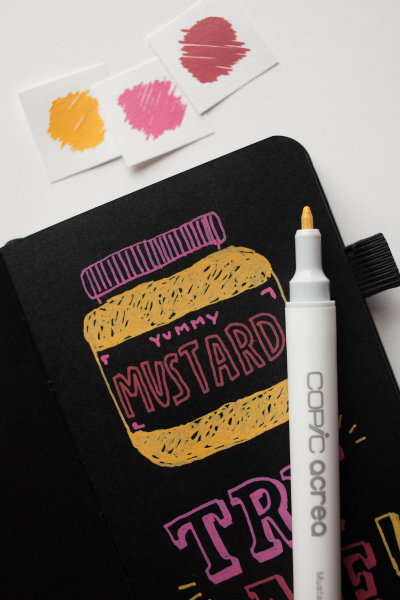
The deeper colours in the Deep set are beautifully chosen. My favourites are definitely 021 Red Bean and 022 Mustard Yellow.
TIP! With these two sets, I was able to create very harmonious colour palettes — they go together really well.
- My first impressions — on the tip and the ink
When using it for the first time, you need to give the marker a quick shake and then pump the ink to the tip to get the ink flowing.
The tip is quite small, Ø 0.8 mm. By changing the angle at which the tip touches the paper, you can increase the surface area and create slightly thicker lines. The ink flow is very consistent and dries quite quickly. The ink is water-based, so there is no odour to distract you from drawing and being creative.
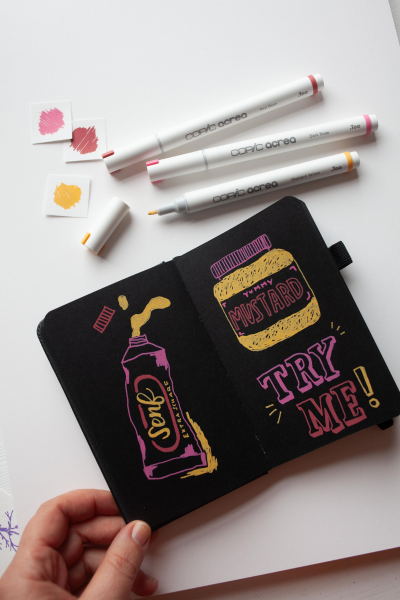
Because the ink is opaque, it also works very well on coloured paper. Here, for example, I’ve used them in a sketchbook with black paper that I still had lying around, and even the light colours stand out against the dark paper.
TIP! These sketchbooks have black paper and offer great value for money — highly recommended, just like everything else from Seawhite or Brighton, for that matter.
But you can also try them on materials other than paper. Try wood, glass, plastic and glass. The possibilities are endless. It’s also a pigmented ink — and therefore lightfast.
- My first impressions — on using them
If you’re looking for a marker with a fantastic, modern colour range, opaque ink and a fine, precise tip, then you should definitely take a look at these Acrea markers.
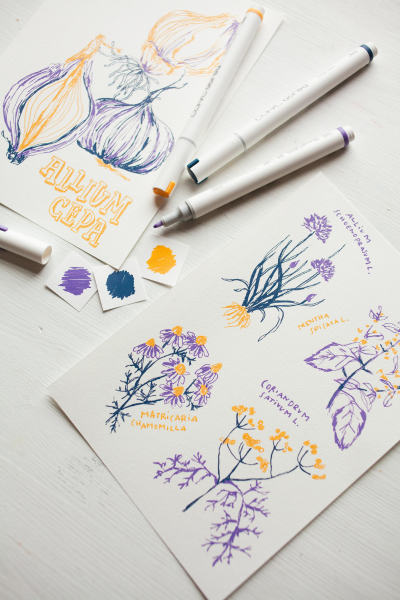
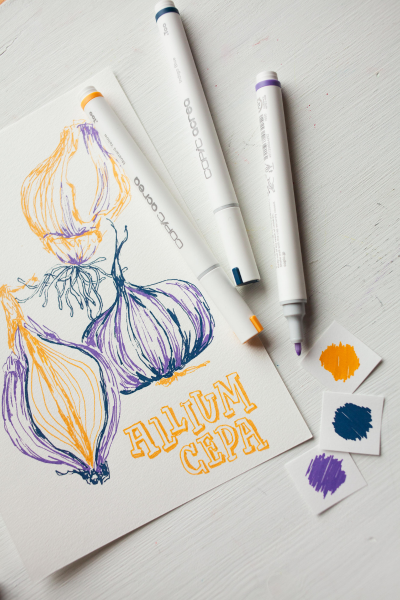
I’ve used them for detailed botanical drawings. And I can imagine I’ll be using them a lot for my lettering work too, because you can build up layers of colour so well with them.
You can also combine this marker with COPIC® alcohol markers — whether that’s the Classic, Ciao or Sketch marker. If you want to use them together, it’s advisable to use this Acrea marker after the alcohol markers.
TIP! For example, first create a drawing with alcohol markers and, once dry, add finishing touches with this marker. Because alcohol-based ink is transparent and Acrea ink is opaque, you’ll achieve fascinating results. Conversely, you cannot use alcohol markers on work you have started with this marker — the alcohol ink would dissolve and discolour the Acrea ink, even after it has dried.
Mind — if you want to cover large areas quickly, this might not be the right choice. The tip is too small for colouring in large areas — unless you really find this a meditative process!
► results — a few studies in which I tested these markers
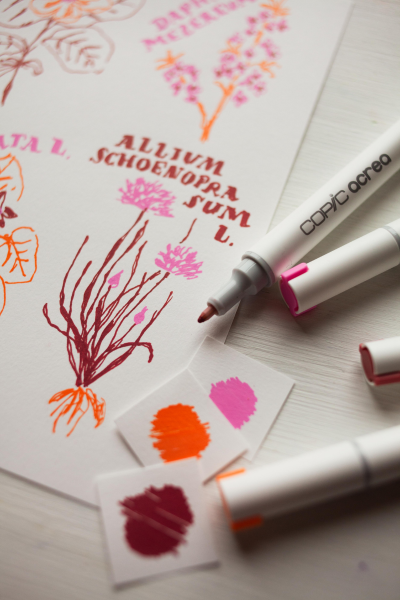
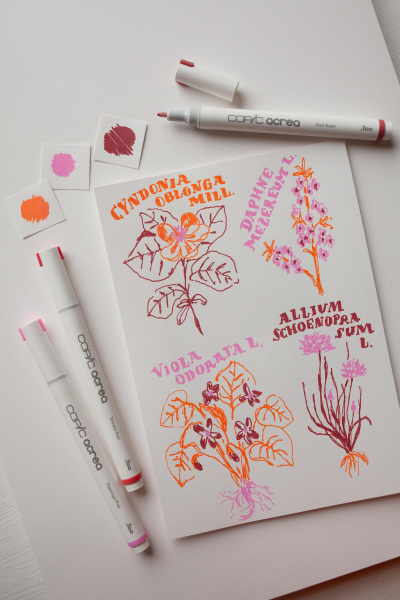
- 009 Mandarin orange
- 007 Flamingo pink
- 021 Red bean
► My conclusion?
My first impression is positive – more than positive, in fact. These Acrea markers are a brilliant addition to my toolkit and I can’t wait to test them further – and put them to use! Thank you, Gerstaecker, for asking me to test them.

► over Nadine

Nadine Bieg is a professional German illustrator, artist and lover of sketchbooks — you’ll never see her without her sketchbook — who lives and works in The Hague. She loves filling the pages with small illustrations, but her favourites are letters — lettering — and botanical drawings.
When I’m not drawing — or painting — I’m probably experimenting with colours. Because I have a soft spot for the most beautiful colour combinations.
As well as drawing and painting in mixed media, Nadine enjoys carving stamps.
► More from Nadine — she warmly invites you to follow her!
- Website — Nadine Bieg
- Instagram — Nadine Bieg
- BLOG — Nadine Bieg
- Linkedln — Nadine Bieg
© 2025/2026 — text: Nadine Bieg & edited by Gerstaecker NL | © 2025/26 — images: Nadine Bieg, COPIC® & edited by Gerstaecker NL and GreatArt.